

An American before there was and America!
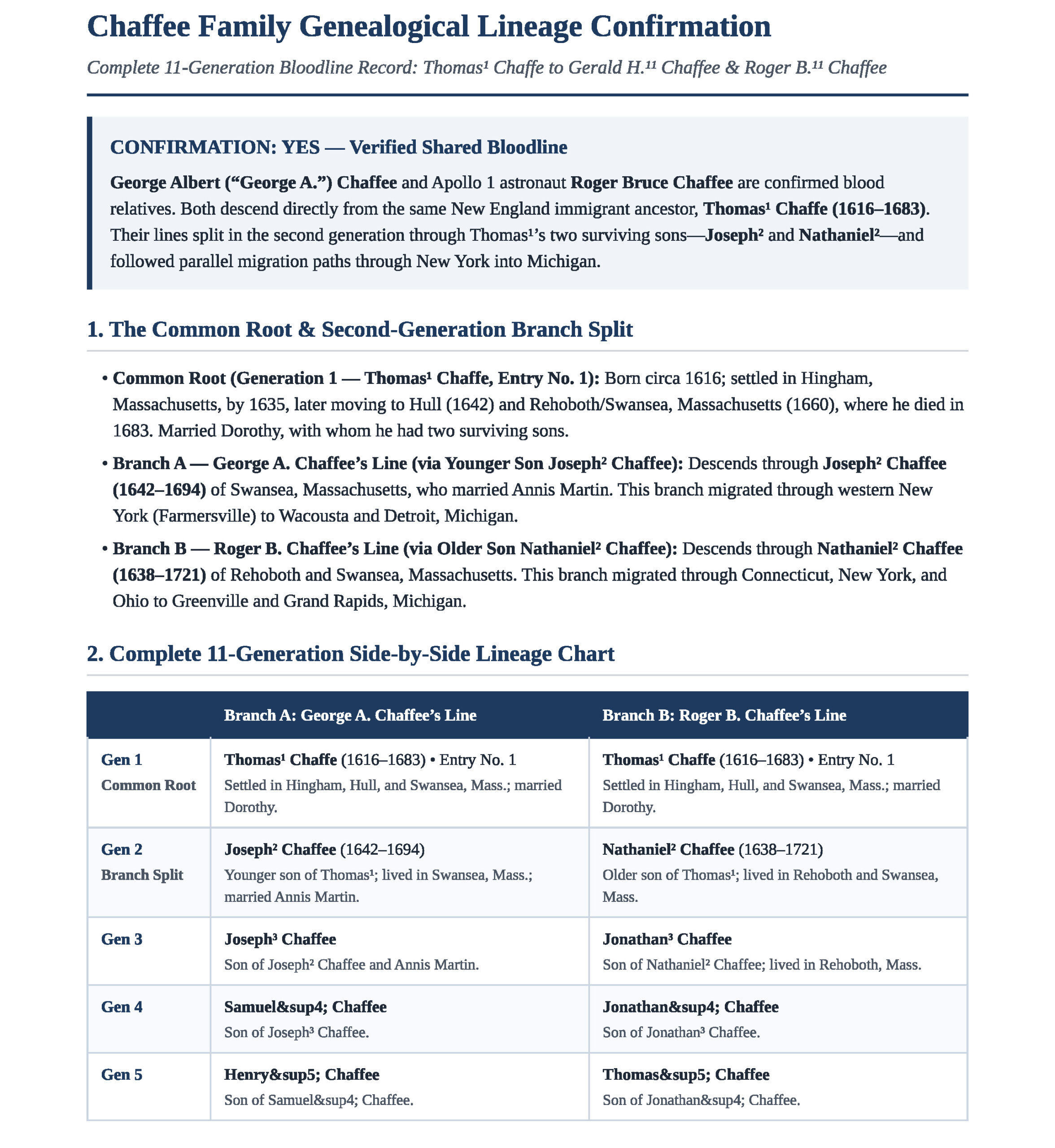
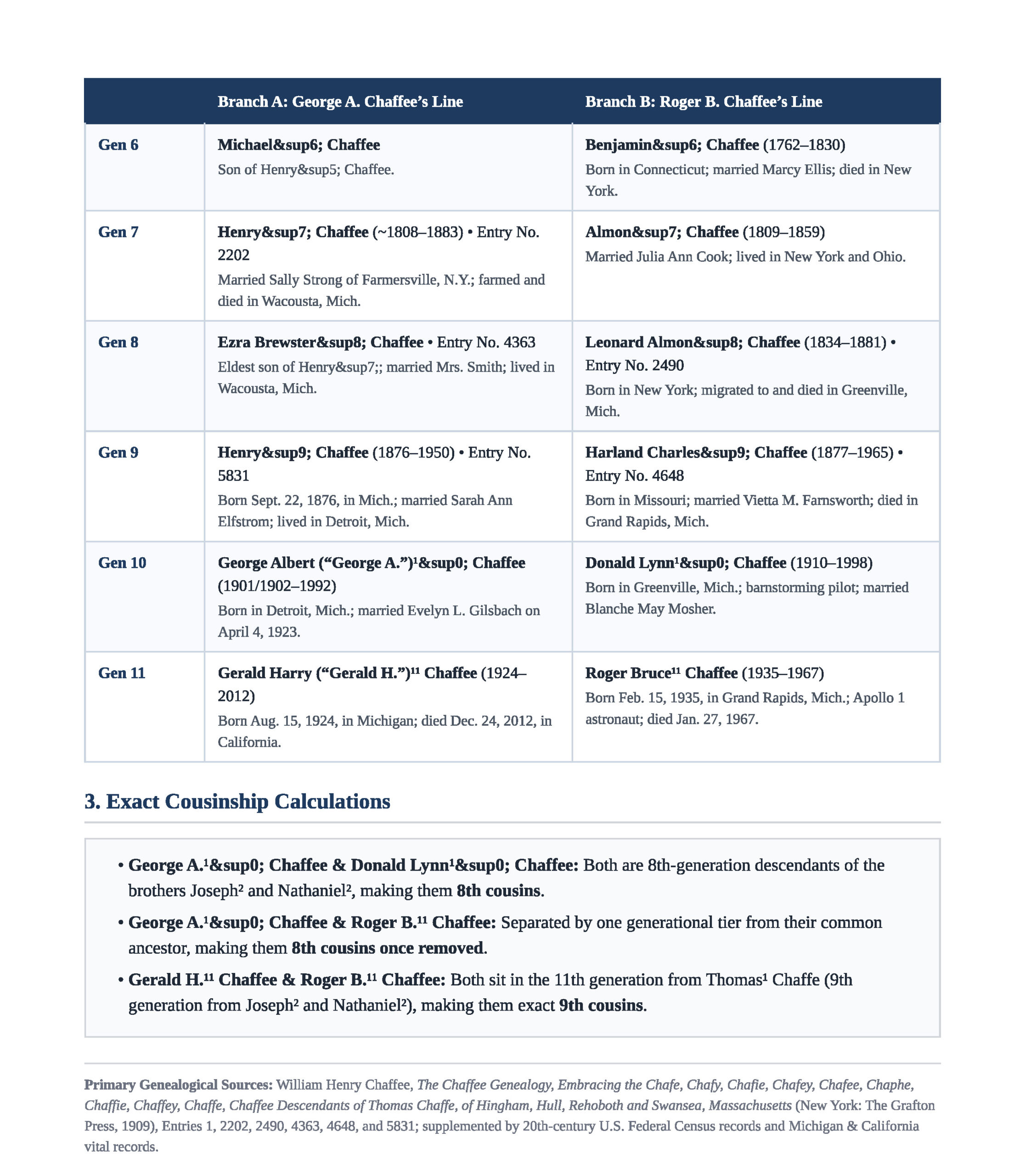
I’m the 14th generation that has descended from the original patriarch (Thomas Chaffee) that came to America.
A CHILDHOOD OF QUESTIONS, CONSEQUENCES & CHOICES
The station wagon ascended up and over the Santa Monica Mountains, leaving the blazing August summer day behind as we traveled over the hill and descended into the Los Angeles Basin.
THE CONVERSATION…
Sitting cross-legged, unbuckled (seat belts weren’t part of our routine back then), in the farthest rear compartment of the station wagon, I was chatting away in rare form. My intended audience was my older brother, Jerry Boy! I must have been about five years old, and my brother was approximately ten.
As I often did, I continued asking my brother questions about every form of stimulation my eyes were experiencing. No, that’s right… feeling, not seeing!
You see, for some reason, my world at five years old was captured primarily as a feeling. As we continued driving, I went on and on and on until my older brother abruptly chimed in and offered me a little of his advanced ten-year-old wisdom.
He said:
“You know, Mike, we only get so many words… and if we use them all up when you’re young, you won’t have any left later in life!”
WOW! For the remainder of the ride, those wise words gave me cause to pause… but not for long. Hum?
In developing my ability to express myself verbally, my communication style eventually evolved into using considerably more words than others might deem necessary. My writing is certainly afflicted with that same tendency.
My dear friends would undoubtedly agree that I enjoy a deep and meaningful conversation, if only for my own entertainment. LOL!
I suppose it is simply another attempt to express as much as possible of what I feel through the way I perceive and experience the world.
NEUROIMAGING STUDIES…
I sometimes wonder whether the way my senses reacted to the world might have been somewhat comparable to what happens when a person experiences hearing impairment and becomes increasingly dependent upon other sensory inputs.
Perhaps my mind’s routing of nourishment was similarly redirected, with the capillaries of verbal expression providing an alternative pathway through which I could process and communicate my perceptions.
In experiencing the world without the advantages or limitations imposed by the written word, my imagination was largely left to its own devices.
This seemingly limitless interaction between internal dialogue, emotional impressions, and the interpretation of what I encountered through my own eyes uniquely encouraged me to seek new ways of understanding the world and, ultimately, expressing what I perceived.
THE EIGHT-YEAR-OLD…
Upon entering elementary school, I began experiencing the cruelties of my peers and the necessity of balancing a strong, purposeful personality against the constant picking and pecking critiques of my schoolyard chums.
Throughout my elementary and junior high school years, my small stature and the clarity of my internal perceptions often conflicted with the assumptions others made about my intelligence.
My developing self-image resisted those implications. The assumptions being imposed upon me by my social surroundings suggested a degree of inferiority that I simply could not accept!
The academic environment, as I experienced it, seemed to be applying a pre-emergent herbicide to any further potential for my intellectual capacity to take root and flourish.
My social defense was to reject the stigma that suggested my cognitive abilities could be reduced to nothing more than a higher GPA or a standardized measurement of academic achievement.
As I entered junior high school, my physical development continued to lag behind that of many of my peers. My smaller stature, at times, made me an easy target for those who found amusement in pushing others around.
Being intellectually capable of outthinking an adversary was one thing. Having the physical tools to employ those talents in anything beyond the gift of thought was another.
At a height of 4′-11″, delivering the internal tones that were screaming for respect often required an expressive INTENSITY that others might have found disproportionate to the circumstances.
Unfortunately, my larger schoolyard chums often failed to recognize the deeper meaning beneath my thin skin or appreciate how these struggles were influencing my developing character.
THE SHAPES, HUES, AND TONES OF FAMILY…
My older brother Jerry contracted polio at three years of age in the early 1950s. This, combined with the challenges associated with dyslexia, further undermined his self-confidence and complicated his ability to establish direction and confidence in his own life.
If that wasn’t enough, another significant complication in my brother’s childhood was his involvement in an orthopedic hospital’s experimental treatment program for polio-related scoliosis.
The treatment required him to wear a full-body plaster cast from approximately three until twelve years of age.
Although these efforts were successful in helping straighten his spine, the experience left deep emotional wounds. The physical limitations and the torment he endured from his peers contributed to another form of scoliosis, one that affected his developing personality.
My younger brother Earl experienced a similar stigma within the educational system because of his dyslexia.
He was placed into what were then called Special Education classes, which were established primarily to accommodate children with significant cognitive or developmental disabilities.
It mattered little that he possessed an extraordinary aptitude for dissecting electronics, understanding mechanical relationships, and building inventions. His educators appeared to measure his abilities primarily through the conventional benchmarks of reading, writing, and arithmetic.
It was a remarkable example of how the sacrifice of a few could apparently serve the purposeful advancement of the academies of Homo-perfectus.
One needed only to express the theorem through the accepted equation of reading and writing. If that couldn’t be accomplished successfully, then how could anyone authenticate one’s cognitive capacity or intellect?
The prejudices imposed by academia, reinforced by the results of its Scholastic Achievement Exams, seemed to justify the delusions underlying some of these decisions.
With such supposedly superior academic judgment, my brother was placed into an educational environment alongside classmates whose actual cognitive limitations were substantially different from his own.
During the 1960s, the Los Angeles City public school system did little to recognize or accommodate many of these less-understood learning differences. As a result, children experiencing such difficulties were often segregated and ostracized, sometimes being treated as though they possessed inferior intelligence or required a fundamentally different educational environment.
Unfortunately, one’s intelligence quotient was, and in many ways remains, a significant influence upon how society evaluates an individual’s perceived usefulness.
Those academically credentialed educators, with all their accumulated master’s degrees, received a failing grade in recognizing and preserving the dignity of the remarkable, almost savant-like genius that existed within my brother.
The simple reality is that imposing such limitations upon an overthinking mind affected by dyslexia can undermine self-confidence and extinguish a person’s belief in the possibilities of their own imagination.
What might otherwise have been possible… had someone simply recognized the potential?
THE CHIP…
My exposure to the narrow corridors of academic society and its misinterpretation of dyslexia provided what I considered a textbook example of the public education system’s failure.
Its self-proclaimed academic competence seemed inadequate when confronted with the challenge of teaching students whose learning differences fell outside conventional expectations.
This exhibition of inadequate educational judgment gave me cause to distance myself from the stigma by developing my own approach to reading.
I chose to practice word memorization rather than rely exclusively upon phonetics.
This self-taught adaptation helped me avoid some of the embarrassment associated with my difficulty in reading and allowed me to become something of a chameleon.
I had witnessed what could happen when someone was unable to phonetically sound out words or read aloud correctly in a classroom environment.
Consequently, I concentrated on teaching myself to recognize, memorize, and read complete words rather than struggle through what often appeared to me as confusing clusters of letters.
Because of these early experiences, my appreciation for the written English language as an effective means of communication and self-expression would remain largely dormant throughout much of my young adult life.
THE NEIGHBORHOOD…
During those early years, growing up in an expanding megalopolis, I gravitated toward neighborhood associates who shared an appetite for summertime adventures.
Our activities included riding bicycles, investigating storm-drain systems, tinkering with and fabricating motorized minibikes and go-karts, building tree forts, and digging shallow caves in vacant fields.
My local associations and friendships provided a well-rounded sampling of pranksters, risk-takers, and envelope-pushing characters.
In that environment, intellectual comparisons were largely irrelevant. The social currency was measured by the size of one’s jewels, metaphorically speaking, rather than one’s IQ.
Although it had little to do with intelligence, a guy who was known to possess a big pair was considerably less likely to be asked to prove it.
Of course, this required leaving behind a lingering uncertainty about just how close the fuse was burning at the end of the sweating stick of dynamite!
It also occasionally required an appropriate exhibition of what might be described as Compulsive Obsessive Explosive Disorder (COED) whenever someone became sufficiently interested in asking, “Show ’em… just how big are they?”
The rules were the rules, and everyone within our band of neighborhood brethren generally understood where the lines were drawn and what might happen if someone became foolish enough to draw new ones.
Looking at another side of this, I sometimes wonder whether our contemporary society’s apparent disorder might benefit from rediscovering something of that primordial understanding of boundaries and consequences.
Perhaps we wouldn’t see quite so much personal unaccountability, from the behavior exhibited in politics to the everyday disappearance of common courtesy at an intersection.
I mean, you might not have people flipping you the bird at a traffic light because of a two-second delay between moving your foot from the brake pedal to the accelerator.
If only because the potential consequences might make such a momentary exhibition of misplaced freedom seem hardly worth the effort!
LESSONS LEARNED…
Corporal punishment seemed to be the go-to solution whenever boys misbehaved during that era of schoolyard indoctrination.
Some lessons were taught and learned rather effectively.
The logic acquired through these experiences established a strong precedent. The examples administered by higher authorities were certainly a source of knowledge, although not necessarily wisdom!
After all, teachers and law enforcement had inherited, by proxy, much of the responsibility for parental supervision and discipline. The proverbial stick of encouragement was accompanied by the familiar instruction:
“Let that be a lesson to you!”
Unfortunately, boys continued behaving poorly, and clowns at traffic lights continued flipping off the wrong people at precisely the wrong moments.
Apparently, some lessons were never learned, no matter how thoroughly someone had been paddled. Hum?
My father served five years in the Navy during the war, while my mother worked in a B-29 manufacturing plant back east.
Following World War II, America experienced a tremendous population boom as returning veterans settled into civilian life and began establishing families.
In 1952, before I was born, my parents decided to leave Michigan with their three children and relocate to California.
The 1960s would become the decade of my adolescence. Family life, combined with an increasingly diverse range of social interactions, helped formulate the views and perspectives of the world that I would eventually come to question.
The 1950s and 1960s represented a changing American demographic and cultural landscape, an era commonly associated with the Baby Boom generation.
Anchored by the Midwestern morality of my mother’s Catholic upbringing and my father’s down-to-earth, heartfelt farmer’s sensibilities, I ventured into the largely unsupervised world of Los Angeles and its evolving hipster culture.
I carried a fairly strong moral foundation in my personal toolbox, even as I encountered an increasingly diverse and changing social environment.
That exposure provided a unique opportunity to observe the incoming cultural tides and perhaps recognize which of the next waves might be capable of sinking a ship!
From the sexual revolution and the philosophy of “Make Love, Not War” to the unsuspecting hazards associated with the hippie movement’s mind-altering drug culture, the 1960s introduced freedoms that were accompanied by entirely new dangers.
The emerging Neo-Americana had become virtually unrecognizable when compared with the familiar mom-and-apple-pie, “Leave It to Beaver” image of the 1950s.
American society was being placed into a blender!
The growing disapproval of the Vietnam War, combined with a median U.S. population age of approximately 27.5 years, helped ignite the fuse of social unrest.
The resulting cultural upheaval was, in some respects, reminiscent of more recent movements such as the Arab Spring.
Growing up in an area that had become a melting pot for this cultural revolution allowed me to smell, see, and hear firsthand the many vehicles delivering change.
The music of the 1960s blared out everything from “War, What Is It Good For?” to “Everybody Must Get Stoned.”
Artists who would eventually become world-famous, including Jim Morrison and The Doors, Jefferson Airplane, Jimi Hendrix, and Janis Joplin, were once simply musicians playing local bars and high-school stadium events.
The 1960s offered young people a degree of freedom from parental supervision that previous generations might have found difficult to imagine.
My buddies and I would pedal our bicycles for miles from home, sometimes making our way directly to the chain-link barricades surrounding these events.
Those locations afforded us a bird’s-eye view of topless hippie girls and rowdy motorcycle gangs enjoying their own version of an ungoverned Roman holiday!
These experiences also became part of our education. From time to time, we learned that crossing territorial boundaries could carry a price, and that some consequences could be considerably more serious than a simple lesson in manners.
DEBBIE…
My older sister, Debora Lynn Chaffee, was a kind soul. Two years older than I, she would become a brief but powerful influence during my teenage years.
She trusted me enough to allow me to drive her little MG all the way down to San Diego for a weekend when I was fifteen. She knew I would eventually need some practice before getting my driver’s license.
Little did I know that she had fallen into a troubled crowd, and that our trip to San Diego would be among our last experiences together.
I believe it was around that time that she contracted infectious hepatitis. She was a thin, frail young woman with a million-dollar smile who was only beginning to discover her potential.
I remember that Sunday morning as though it were yesterday.
I had returned home after spending the night at a buddy’s house and was walking up the front walkway toward our front door.
I could see my oldest sister, Karen, standing on the porch.
She was crying.
As I approached, the air seemed to become still. An impending sense of doom lingered in that absence of sound.
The next ticks of the clock seemed to unfold in slow motion.
The words…
“Debbie died last night.”
…appeared to be rolling off Karen’s lips, but they fell silent.
I could see her lips moving, but I couldn’t hear the words.
I didn’t want to hear the words!
Oh, Lord… how could this be?
Was all of this simply being imagined?
There wasn’t any sound. Maybe it was just a bad dream, I thought.
Maybe this wasn’t really happening?
But no… no.
Eventually, the sound reached my ears, and my mind was introduced to the totality of a reality that confirmed my sister was dead.
The finality of death is so abrupt that I don’t believe we are equipped to fully process it in the immediate moments after receiving the news.
It takes time for this new reality to become fully appreciated and for the mind to begin fathoming the fact that someone dear to you has moved on without a word spoken, without a forwarding address to write to, without a telephone number to call, or…
What then?
It requires us to be reintroduced to that reality time and again over the course of months and years, gradually coming to terms with the understanding that those who are gone will never again walk through that front door.
It takes time to comprehend the absolute terms of death and to fully appreciate its finality.
Finality… yes!
It is so abruptly final, and forever empty.
I suppose this experience may have prepared me, at least somewhat, for the loss of my younger brother some years later.
Perhaps this gradual polishing of our emotional capacity shapes the lenses through which we peer into our own realities.
It would be through those lenses, and through the examples of what we perceive as rewards and consequences, that I began developing my own opinions about the world behind one particular set of inquisitive eyes.
Throughout my school years, the challenges of dyslexia, combined with what I perceived as the limitations imposed by my socioeconomic circumstances, contributed to the development of an illusionary sense of self.
I was blind to some of the influences behind my rebellious behavior because the heart of my soul was temporarily blind to its broader responsibilities and unprepared for the brutality that life could deliver.
Perhaps these experiences helped justify my belief that the only effective defense was a strong offense and that head-butting was fair play.
Whatever established my particular waypoints and bearings, I have come to believe that those experiences served a purpose in my journey through life.
I chose a reactionary path of logic, and I would eventually have to own the results of those choices.
We can often turn a blind eye to the freedom of choice, allowing ourselves to escape, at least momentarily, the responsibilities associated with conscious awareness and personal accountability.
The reality, however, is that rewards and consequences arise from our choices.
How we choose to balance the freedom of reason with the responsibility of making those choices ultimately determines much of what follows.
THE EYE OPENER…
One evening, while standing unsuspectingly outside a typical 1970s Friday-night open party in the San Fernando Valley, a muzzle flash erupted in the distance, abruptly breaking the calm of the darkness.
The exposed, elongated gravel driveway of a ranch-style house suddenly introduced a very different appreciation for the mortal risks associated with participating in that lifestyle.
Although the initial succession of flashes failed to communicate any immediate sense of urgency, within a nanosecond the projectiles from a 9mm pistol, traveling at approximately 1,250 feet per second, penetrated the trunk of a parked Riviera located beside me and my small group of gathered brothers.
Hot fragments of metal and shattered paint ricocheted from the car’s trunk. An abundance of flying sparks was magnified in the reflections dancing across the Riviera’s polished chrome bumper.
It was at such a moment that time seemed to take on an entirely different form of progression between the ticks and tocks of the second hand!
DAS AUGENBLICK…
Some might describe this experience as an undressing of one’s subjective reality, a moment that eclipses any ordinary appreciation for what takes place between the blinking of an eye.
In the lull between the sounds of penetrating gunfire, a small group of boys who thought of themselves as men suddenly came face-to-face with a new understanding of the conditions surrounding their imagined version of living the dream.
It was a realization of how easily someone could become a finalist in the game of life within the time that had elapsed between the blinking of an eye.
Das Augenblick!
After all, this was a life-or-death calling. And if, by chance, the latter had unfolded, what would have remained of one’s individuality, uniqueness, or potential?
Having reached the legal age of eighteen, I and a small sampling of my childhood brethren made a decisive leap that night, in that place, and at that particular moment.
We were beginning to challenge the perceptions of the world we had inherited and the assumptions upon which we had built our own.
I’m the 14th generation that has descended from the original patriarch (Thomas Chaffee) that came to America.
A CHILDHOOD OF QUESTIONS, CONSEQUENCES & CHOICES
The station wagon ascended up and over the Santa Monica Mountains, leaving the blazing August summer day behind as we traveled over the hill and descended into the Los Angeles Basin.
THE CONVERSATION…
Sitting cross-legged, unbuckled (seat belts weren’t part of our routine back then), in the farthest rear compartment of the station wagon, I was chatting away in rare form. My intended audience was my older brother, Jerry Boy! I must have been about five years old, and my brother was approximately ten.
As I often did, I continued asking my brother questions about every form of stimulation my eyes were experiencing. No, that’s right… feeling, not seeing!
You see, for some reason, my world at five years old was captured primarily as a feeling. As we continued driving, I went on and on and on until my older brother abruptly chimed in and offered me a little of his advanced ten-year-old wisdom.
He said:
“You know, Mike, we only get so many words… and if we use them all up when you’re young, you won’t have any left later in life!”
WOW! For the remainder of the ride, those wise words gave me cause to pause… but not for long. Hum?
In developing my ability to express myself verbally, my communication style eventually evolved into using considerably more words than others might deem necessary. My writing is certainly afflicted with that same tendency.
My dear friends would undoubtedly agree that I enjoy a deep and meaningful conversation, if only for my own entertainment. LOL!
I suppose it is simply another attempt to express as much as possible of what I feel through the way I perceive and experience the world.
NEUROIMAGING STUDIES…
I sometimes wonder whether the way my senses reacted to the world might have been somewhat comparable to what happens when a person experiences hearing impairment and becomes increasingly dependent upon other sensory inputs.
Perhaps my mind’s routing of nourishment was similarly redirected, with the capillaries of verbal expression providing an alternative pathway through which I could process and communicate my perceptions.
In experiencing the world without the advantages or limitations imposed by the written word, my imagination was largely left to its own devices.
This seemingly limitless interaction between internal dialogue, emotional impressions, and the interpretation of what I encountered through my own eyes uniquely encouraged me to seek new ways of understanding the world and, ultimately, expressing what I perceived.
THE EIGHT-YEAR-OLD…
Upon entering elementary school, I began experiencing the cruelties of my peers and the necessity of balancing a strong, purposeful personality against the constant picking and pecking critiques of my schoolyard chums.
Throughout my elementary and junior high school years, my small stature and the clarity of my internal perceptions often conflicted with the assumptions others made about my intelligence.
My developing self-image resisted those implications. The assumptions being imposed upon me by my social surroundings suggested a degree of inferiority that I simply could not accept!
The academic environment, as I experienced it, seemed to be applying a pre-emergent herbicide to any further potential for my intellectual capacity to take root and flourish.
My social defense was to reject the stigma that suggested my cognitive abilities could be reduced to nothing more than a higher GPA or a standardized measurement of academic achievement.
As I entered junior high school, my physical development continued to lag behind that of many of my peers. My smaller stature, at times, made me an easy target for those who found amusement in pushing others around.
Being intellectually capable of outthinking an adversary was one thing. Having the physical tools to employ those talents in anything beyond the gift of thought was another.
At a height of 4′-11″, delivering the internal tones that were screaming for respect often required an expressive INTENSITY that others might have found disproportionate to the circumstances.
Unfortunately, my larger schoolyard chums often failed to recognize the deeper meaning beneath my thin skin or appreciate how these struggles were influencing my developing character.
THE SHAPES, HUES, AND TONES OF FAMILY…
My older brother Jerry contracted polio at three years of age in the early 1950s. This, combined with the challenges associated with dyslexia, further undermined his self-confidence and complicated his ability to establish direction and confidence in his own life.
If that wasn’t enough, another significant complication in my brother’s childhood was his involvement in an orthopedic hospital’s experimental treatment program for polio-related scoliosis.
The treatment required him to wear a full-body plaster cast from approximately three until twelve years of age.
Although these efforts were successful in helping straighten his spine, the experience left deep emotional wounds. The physical limitations and the torment he endured from his peers contributed to another form of scoliosis, one that affected his developing personality.
My younger brother Earl experienced a similar stigma within the educational system because of his dyslexia.
He was placed into what were then called Special Education classes, which were established primarily to accommodate children with significant cognitive or developmental disabilities.
It mattered little that he possessed an extraordinary aptitude for dissecting electronics, understanding mechanical relationships, and building inventions. His educators appeared to measure his abilities primarily through the conventional benchmarks of reading, writing, and arithmetic.
It was a remarkable example of how the sacrifice of a few could apparently serve the purposeful advancement of the academies of Homo-perfectus.
One needed only to express the theorem through the accepted equation of reading and writing. If that couldn’t be accomplished successfully, then how could anyone authenticate one’s cognitive capacity or intellect?
The prejudices imposed by academia, reinforced by the results of its Scholastic Achievement Exams, seemed to justify the delusions underlying some of these decisions.
With such supposedly superior academic judgment, my brother was placed into an educational environment alongside classmates whose actual cognitive limitations were substantially different from his own.
During the 1960s, the Los Angeles City public school system did little to recognize or accommodate many of these less-understood learning differences. As a result, children experiencing such difficulties were often segregated and ostracized, sometimes being treated as though they possessed inferior intelligence or required a fundamentally different educational environment.
Unfortunately, one’s intelligence quotient was, and in many ways remains, a significant influence upon how society evaluates an individual’s perceived usefulness.
Those academically credentialed educators, with all their accumulated master’s degrees, received a failing grade in recognizing and preserving the dignity of the remarkable, almost savant-like genius that existed within my brother.
The simple reality is that imposing such limitations upon an overthinking mind affected by dyslexia can undermine self-confidence and extinguish a person’s belief in the possibilities of their own imagination.
What might otherwise have been possible… had someone simply recognized the potential?
THE CHIP…
My exposure to the narrow corridors of academic society and its misinterpretation of dyslexia provided what I considered a textbook example of the public education system’s failure.
Its self-proclaimed academic competence seemed inadequate when confronted with the challenge of teaching students whose learning differences fell outside conventional expectations.
This exhibition of inadequate educational judgment gave me cause to distance myself from the stigma by developing my own approach to reading.
I chose to practice word memorization rather than rely exclusively upon phonetics.
This self-taught adaptation helped me avoid some of the embarrassment associated with my difficulty in reading and allowed me to become something of a chameleon.
I had witnessed what could happen when someone was unable to phonetically sound out words or read aloud correctly in a classroom environment.
Consequently, I concentrated on teaching myself to recognize, memorize, and read complete words rather than struggle through what often appeared to me as confusing clusters of letters.
Because of these early experiences, my appreciation for the written English language as an effective means of communication and self-expression would remain largely dormant throughout much of my young adult life.
THE NEIGHBORHOOD…
During those early years, growing up in an expanding megalopolis, I gravitated toward neighborhood associates who shared an appetite for summertime adventures.
Our activities included riding bicycles, investigating storm-drain systems, tinkering with and fabricating motorized minibikes and go-karts, building tree forts, and digging shallow caves in vacant fields.
My local associations and friendships provided a well-rounded sampling of pranksters, risk-takers, and envelope-pushing characters.
In that environment, intellectual comparisons were largely irrelevant. The social currency was measured by the size of one’s jewels, metaphorically speaking, rather than one’s IQ.
Although it had little to do with intelligence, a guy who was known to possess a big pair was considerably less likely to be asked to prove it.
Of course, this required leaving behind a lingering uncertainty about just how close the fuse was burning at the end of the sweating stick of dynamite!
It also occasionally required an appropriate exhibition of what might be described as Compulsive Obsessive Explosive Disorder (COED) whenever someone became sufficiently interested in asking, “Show ’em… just how big are they?”
The rules were the rules, and everyone within our band of neighborhood brethren generally understood where the lines were drawn and what might happen if someone became foolish enough to draw new ones.
Looking at another side of this, I sometimes wonder whether our contemporary society’s apparent disorder might benefit from rediscovering something of that primordial understanding of boundaries and consequences.
Perhaps we wouldn’t see quite so much personal unaccountability, from the behavior exhibited in politics to the everyday disappearance of common courtesy at an intersection.
I mean, you might not have people flipping you the bird at a traffic light because of a two-second delay between moving your foot from the brake pedal to the accelerator.
If only because the potential consequences might make such a momentary exhibition of misplaced freedom seem hardly worth the effort!
LESSONS LEARNED…
Corporal punishment seemed to be the go-to solution whenever boys misbehaved during that era of schoolyard indoctrination.
Some lessons were taught and learned rather effectively.
The logic acquired through these experiences established a strong precedent. The examples administered by higher authorities were certainly a source of knowledge, although not necessarily wisdom!
After all, teachers and law enforcement had inherited, by proxy, much of the responsibility for parental supervision and discipline. The proverbial stick of encouragement was accompanied by the familiar instruction:
“Let that be a lesson to you!”
Unfortunately, boys continued behaving poorly, and clowns at traffic lights continued flipping off the wrong people at precisely the wrong moments.
Apparently, some lessons were never learned, no matter how thoroughly someone had been paddled. Hum?
My father served five years in the Navy during the war, while my mother worked in a B-29 manufacturing plant back east.
Following World War II, America experienced a tremendous population boom as returning veterans settled into civilian life and began establishing families.
In 1952, before I was born, my parents decided to leave Michigan with their three children and relocate to California.
The 1960s would become the decade of my adolescence. Family life, combined with an increasingly diverse range of social interactions, helped formulate the views and perspectives of the world that I would eventually come to question.
The 1950s and 1960s represented a changing American demographic and cultural landscape, an era commonly associated with the Baby Boom generation.
Anchored by the Midwestern morality of my mother’s Catholic upbringing and my father’s down-to-earth, heartfelt farmer’s sensibilities, I ventured into the largely unsupervised world of Los Angeles and its evolving hipster culture.
I carried a fairly strong moral foundation in my personal toolbox, even as I encountered an increasingly diverse and changing social environment.
That exposure provided a unique opportunity to observe the incoming cultural tides and perhaps recognize which of the next waves might be capable of sinking a ship!
From the sexual revolution and the philosophy of “Make Love, Not War” to the unsuspecting hazards associated with the hippie movement’s mind-altering drug culture, the 1960s introduced freedoms that were accompanied by entirely new dangers.
The emerging Neo-Americana had become virtually unrecognizable when compared with the familiar mom-and-apple-pie, “Leave It to Beaver” image of the 1950s.
American society was being placed into a blender!
The growing disapproval of the Vietnam War, combined with a median U.S. population age of approximately 27.5 years, helped ignite the fuse of social unrest.
The resulting cultural upheaval was, in some respects, reminiscent of more recent movements such as the Arab Spring.
Growing up in an area that had become a melting pot for this cultural revolution allowed me to smell, see, and hear firsthand the many vehicles delivering change.
The music of the 1960s blared out everything from “War, What Is It Good For?” to “Everybody Must Get Stoned.”
Artists who would eventually become world-famous, including Jim Morrison and The Doors, Jefferson Airplane, Jimi Hendrix, and Janis Joplin, were once simply musicians playing local bars and high-school stadium events.
The 1960s offered young people a degree of freedom from parental supervision that previous generations might have found difficult to imagine.
My buddies and I would pedal our bicycles for miles from home, sometimes making our way directly to the chain-link barricades surrounding these events.
Those locations afforded us a bird’s-eye view of topless hippie girls and rowdy motorcycle gangs enjoying their own version of an ungoverned Roman holiday!
These experiences also became part of our education. From time to time, we learned that crossing territorial boundaries could carry a price, and that some consequences could be considerably more serious than a simple lesson in manners.
DEBBIE…
My older sister, Debora Lynn Chaffee, was a kind soul. Two years older than I, she would become a brief but powerful influence during my teenage years.
She trusted me enough to allow me to drive her little MG all the way down to San Diego for a weekend when I was fifteen. She knew I would eventually need some practice before getting my driver’s license.
Little did I know that she had fallen into a troubled crowd, and that our trip to San Diego would be among our last experiences together.
I believe it was around that time that she contracted infectious hepatitis. She was a thin, frail young woman with a million-dollar smile who was only beginning to discover her potential.
I remember that Sunday morning as though it were yesterday.
I had returned home after spending the night at a buddy’s house and was walking up the front walkway toward our front door.
I could see my oldest sister, Karen, standing on the porch.
She was crying.
As I approached, the air seemed to become still. An impending sense of doom lingered in that absence of sound.
The next ticks of the clock seemed to unfold in slow motion.
The words…
“Debbie died last night.”
…appeared to be rolling off Karen’s lips, but they fell silent.
I could see her lips moving, but I couldn’t hear the words.
I didn’t want to hear the words!
Oh, Lord… how could this be?
Was all of this simply being imagined?
There wasn’t any sound. Maybe it was just a bad dream, I thought.
Maybe this wasn’t really happening?
But no… no.
Eventually, the sound reached my ears, and my mind was introduced to the totality of a reality that confirmed my sister was dead.
The finality of death is so abrupt that I don’t believe we are equipped to fully process it in the immediate moments after receiving the news.
It takes time for this new reality to become fully appreciated and for the mind to begin fathoming the fact that someone dear to you has moved on without a word spoken, without a forwarding address to write to, without a telephone number to call, or…
What then?
It requires us to be reintroduced to that reality time and again over the course of months and years, gradually coming to terms with the understanding that those who are gone will never again walk through that front door.
It takes time to comprehend the absolute terms of death and to fully appreciate its finality.
Finality… yes!
It is so abruptly final, and forever empty.
I suppose this experience may have prepared me, at least somewhat, for the loss of my younger brother some years later.
Perhaps this gradual polishing of our emotional capacity shapes the lenses through which we peer into our own realities.
It would be through those lenses, and through the examples of what we perceive as rewards and consequences, that I began developing my own opinions about the world behind one particular set of inquisitive eyes.
Throughout my school years, the challenges of dyslexia, combined with what I perceived as the limitations imposed by my socioeconomic circumstances, contributed to the development of an illusionary sense of self.
I was blind to some of the influences behind my rebellious behavior because the heart of my soul was temporarily blind to its broader responsibilities and unprepared for the brutality that life could deliver.
Perhaps these experiences helped justify my belief that the only effective defense was a strong offense and that head-butting was fair play.
Whatever established my particular waypoints and bearings, I have come to believe that those experiences served a purpose in my journey through life.
I chose a reactionary path of logic, and I would eventually have to own the results of those choices.
We can often turn a blind eye to the freedom of choice, allowing ourselves to escape, at least momentarily, the responsibilities associated with conscious awareness and personal accountability.
The reality, however, is that rewards and consequences arise from our choices.
How we choose to balance the freedom of reason with the responsibility of making those choices ultimately determines much of what follows.
THE EYE OPENER…
One evening, while standing unsuspectingly outside a typical 1970s Friday-night open party in the San Fernando Valley, a muzzle flash erupted in the distance, abruptly breaking the calm of the darkness.
The exposed, elongated gravel driveway of a ranch-style house suddenly introduced a very different appreciation for the mortal risks associated with participating in that lifestyle.
Although the initial succession of flashes failed to communicate any immediate sense of urgency, within a nanosecond the projectiles from a 9mm pistol, traveling at approximately 1,250 feet per second, penetrated the trunk of a parked Riviera located beside me and my small group of gathered brothers.
Hot fragments of metal and shattered paint ricocheted from the car’s trunk. An abundance of flying sparks was magnified in the reflections dancing across the Riviera’s polished chrome bumper.
It was at such a moment that time seemed to take on an entirely different form of progression between the ticks and tocks of the second hand!
DAS AUGENBLICK…
Some might describe this experience as an undressing of one’s subjective reality, a moment that eclipses any ordinary appreciation for what takes place between the blinking of an eye.
In the lull between the sounds of penetrating gunfire, a small group of boys who thought of themselves as men suddenly came face-to-face with a new understanding of the conditions surrounding their imagined version of living the dream.
It was a realization of how easily someone could become a finalist in the game of life within the time that had elapsed between the blinking of an eye.
Das Augenblick!
After all, this was a life-or-death calling. And if, by chance, the latter had unfolded, what would have remained of one’s individuality, uniqueness, or potential?
Having reached the legal age of eighteen, I and a small sampling of my childhood brethren made a decisive leap that night, in that place, and at that particular moment.
We were beginning to challenge the perceptions of the world we had inherited and the assumptions upon which we had built our own.